Esports Salaries and Prize Money in 2026, Explained

A $75 million event pool is a spectacular headline. It is terrible salary data.
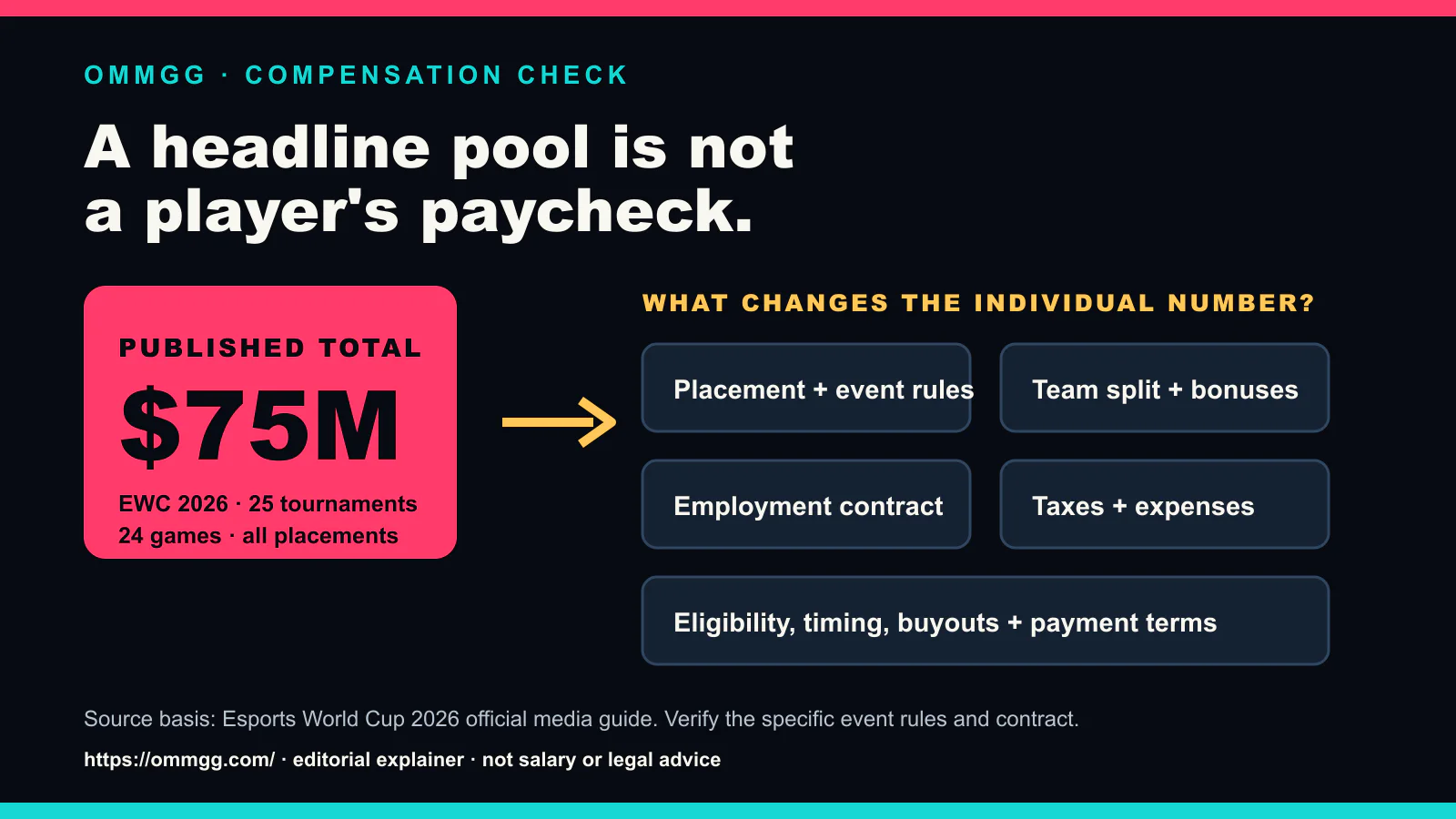
The Esports World Cup’s official 2026 media guide lists a $75 million total across 25 tournaments and 24 games. That figure does not tell you one player’s salary, the prize for a specific placement, a team’s contractual split, or the amount left after tax.
The compensation stack
A professional player may receive some combination of:
- salary or stipend from a team;
- tournament prize share;
- streaming platform revenue;
- personal sponsorship and appearances;
- team sponsorship or merchandise share;
- creator-code, digital-item, or publisher program revenue;
- housing, travel, equipment, health, or other benefits.
Not every player receives every category. Public disclosure is inconsistent, and “earnings†databases commonly record prize results rather than total compensation.
Headline pool to player bank account
Before treating a prize announcement as income, ask:
- Is the number for one tournament, one game, a club championship, or an entire multi-game event?
- What placements earn money?
- Is payment made to the player, roster, team entity, or club?
- What do the tournament rules and player/team contract say about splits?
- Are coaches, substitutes, agents, or the organization included?
- What taxes, withholding, travel costs, or currency conversion apply?
- When is payment due, and what verification is required?
A total pool divided by the number of players is almost never a valid calculation.
Salary data is usually private
The old article divided players into “rookie,†“mid-tier,†“established,†and “superstar†income tiers without data. That shape may sound intuitive, but it is not a salary survey.
Even official league rules can change. Riot’s 2026 NACL update removed prior California-based salary and full-time-employment requirements for contracts entered into its Tier 2 Global Contract Database, while adding a buyout cap of up to six months of salary. That is a useful example of contract structure—not a league-wide salary figure.
Contract terms matter as much as the number
Players should understand:
- guaranteed term and termination rights;
- benching and substitute pay;
- bonus definitions;
- prize and sponsorship splits;
- streaming-hour obligations;
- likeness, handle, and content rights;
- travel, visa, housing, and equipment responsibilities;
- buyout, transfer, exclusivity, and non-compete language;
- disciplinary process and dispute forum;
- tax classification and withholding.
Independent legal and tax advice can be worth more than another round of negotiation over a headline salary.
Streaming and sponsorship are not guaranteed floors
Streaming income depends on audience, platform terms, schedule, ads, subscriptions, gifts, and sponsorship. It can complement competition, but we found no basis for the old claim that it is “often the most reliable long-term income.â€
Sponsorship likewise varies by personal brand, category conflicts, region, and contract. A team logo on a jersey does not prove every player receives a direct share.
Taxes cross borders quickly
Tax treatment depends on residence, source of income, event location, employment status, treaties, and local law. In the United States, IRS guidance says prizes and awards generally must be included in income. Foreign competitors can face additional withholding and reporting issues.
That is an example, not global tax advice. A player traveling across several countries should use a professional who understands athlete, entertainer, or contractor income in the relevant jurisdictions.
Sources
- Esports World Cup 2026 media guide
- LoL Esports: 2026 NACL contract updates
- IRS: prizes and awards
- IRS: worker classification
Source check: 27 July 2026.
esportssalariesprize moneypro gamerscareers2026